 ?>
?>
The demand for plastic boxes is growing, but the real challenge for suppliers is no longer simply producing a better box.
It is about delivering the right box, at the right cost, at the right time.
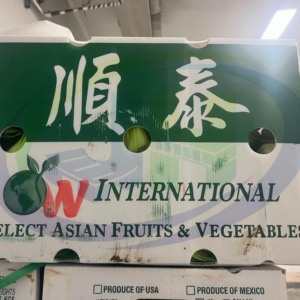
We were reminded of this recently during a video meeting with a large packaging company based in California. The company serves customers across California and Arizona, with business extending into Mexico, Washington and Oregon, covering a significant part of the U.S. West Coast agricultural packaging market.
We cannot disclose the customer’s name or commercially sensitive information, but the discussion provided a valuable first-hand look at what is happening in the produce packaging market.
And one message from the conversation was particularly clear:
Plastic packaging has a real market opportunity, but supply-chain competitiveness will determine how much of that opportunity can be retained.
A Real Conversation About the Future of Produce Packaging
The customer has extensive experience working with agricultural packaging companies and has previously sourced plastic corrugated boxes from suppliers in South America, including Brazil and Peru.
During our discussion, we talked about a major change that has taken place over the past several years.
Many agricultural customers that traditionally used waxed paper cartons have been testing or switching to plastic packaging.
This transition makes sense from a commercial perspective.
When the cost of waxed paper cartons increases, the price difference between traditional cartons and plastic alternatives becomes smaller.
In some cases, customers may find that a plastic produce box is now competitively priced compared with a waxed carton.
Once customers test the plastic packaging and recognize its performance, the question becomes less about:
“Why should we use plastic?”
and more about:
“Can we get plastic packaging when we need it?”
That distinction is extremely important.
Why Lead Time Matters So Much in Fresh Produce
During the meeting, the customer explained something that is easy to overlook if you are only looking at packaging from a manufacturing perspective.
Fresh produce does not wait for packaging.
Agricultural products such as broccoli, cilantro and other fresh vegetables are highly time-sensitive.
Once harvested, the product needs to move quickly through the supply chain and eventually reach supermarkets, food-service operations and consumers.
If packaging is not available when the crop is ready to ship, the problem is much larger than the cost of the boxes.
The customer may face:
- Delayed shipments
- Additional storage requirements
- Lost product value
- Reduced shelf life
- Disruption to customer deliveries
- Potential loss of an agricultural order
This is why a grower may sometimes choose a packaging product that costs slightly more simply because it is available immediately.
For the agricultural packaging industry, availability is part of the product.
The Competition Is No Longer Just Plastic vs. Waxed Paper
One of the most interesting points from our conversation was that the competitive landscape is changing.
A few years ago, the discussion could be simplified to:
Waxed carton vs. plastic box
Today, it is more complicated.
Customers are comparing:
Price + Quality + Lead Time + Availability + Supply Reliability
A plastic box may have excellent durability and reusability.
It may also have a competitive price.
But if the customer has to wait many weeks for production and transportation, the practical advantage can quickly disappear.
Meanwhile, a local or regional supplier may be able to provide traditional packaging much faster.
For a grower dealing with a short harvest window, this can be a decisive factor.
Why South American Suppliers Are Competitive — But Not Always on Price
The customer also shared valuable experience from working with suppliers in Brazil and Peru.
These suppliers have an important advantage:
geographic proximity.
Their time zones are closer to the U.S., communication can be relatively convenient, and transportation schedules can be easier to predict.
For example, the customer indicated that shipping a container from Peru to the Port of Los Angeles can be commercially manageable from a lead-time perspective.
But another problem remains:
cost.
Stable raw material and transportation costs do not necessarily mean low costs.
For many U.S. buyers, the final landed cost still determines whether a packaging solution can compete in the market.
This is where Chinese manufacturing has created a different opportunity.
Why U.S. Buyers Are Looking at China
Chinese plastic manufacturers can offer a different combination of advantages:
- Competitive manufacturing costs
- Large-scale production
- Mature plastic processing technology
- Flexible customization
- Multiple production lines
- Established raw material supply chains
- Experience with export orders
The challenge is not necessarily to replace suppliers from South America.
Instead, there is an opportunity to combine different supply-chain advantages.
A U.S. packaging company may benefit from having:
Local market knowledge + multiple international manufacturing sources
This can provide more flexibility when demand changes or existing suppliers cannot meet a particular requirement.
Our Experience Producing Plastic Corrugated Boxes
For us, this discussion was particularly relevant because Junhui Plastics has already produced plastic corrugated boxes for customers connected with the U.S. market.
Over the years, we have accumulated practical experience in:
- PP corrugated sheet selection
- Material formulation
- Box structural design
- Heat welding
- Ultrasonic welding
- Printing
- Cutting and assembly
- Quality testing
- Large-volume production
For plastic produce boxes, material selection and formulation are particularly important.
A box may look similar from the outside while performing very differently in actual transportation.
The right formulation needs to consider the customer’s application, required strength, weight, environment and production process.
This is why we do not believe that “one material formula fits every customer.”
Quality Control Starts with the Raw Material
One of the questions we often receive from potential customers is:
How do you ensure that a plastic corrugated box will perform properly after production?
Our approach starts before the box is manufactured.
Our laboratory and quality-control process covers multiple stages, from raw material analysis to finished-product testing.
Depending on the product and application, testing can include:
Raw Material Analysis
Material characteristics are evaluated before production to help ensure consistency and suitability for the application.
Drop Testing
Drop testing helps evaluate the box’s ability to withstand impact during handling and transportation.
Puncture Testing
Puncture resistance is important when boxes encounter sharp edges, rough handling or concentrated impact.
Load-Bearing Testing
Load-bearing tests help evaluate how the finished box performs under weight and stacking conditions.
This approach allows us to look beyond the appearance of the product.
For agricultural packaging, performance during transportation is what ultimately matters.
Seven Production Lines for Large-Volume Orders
Another important point from our discussion was production capacity.
Agricultural packaging orders can be highly seasonal.
A supplier may need to handle a large order within a relatively short production window.
Junhui Plastics currently has seven production lines available for plastic corrugated box production.
Our manufacturing capabilities include:
- PP corrugated sheet production
- Heat welding
- Ultrasonic welding
- Cutting and forming
- High-resolution five-color printing
- Box assembly
- Customized production
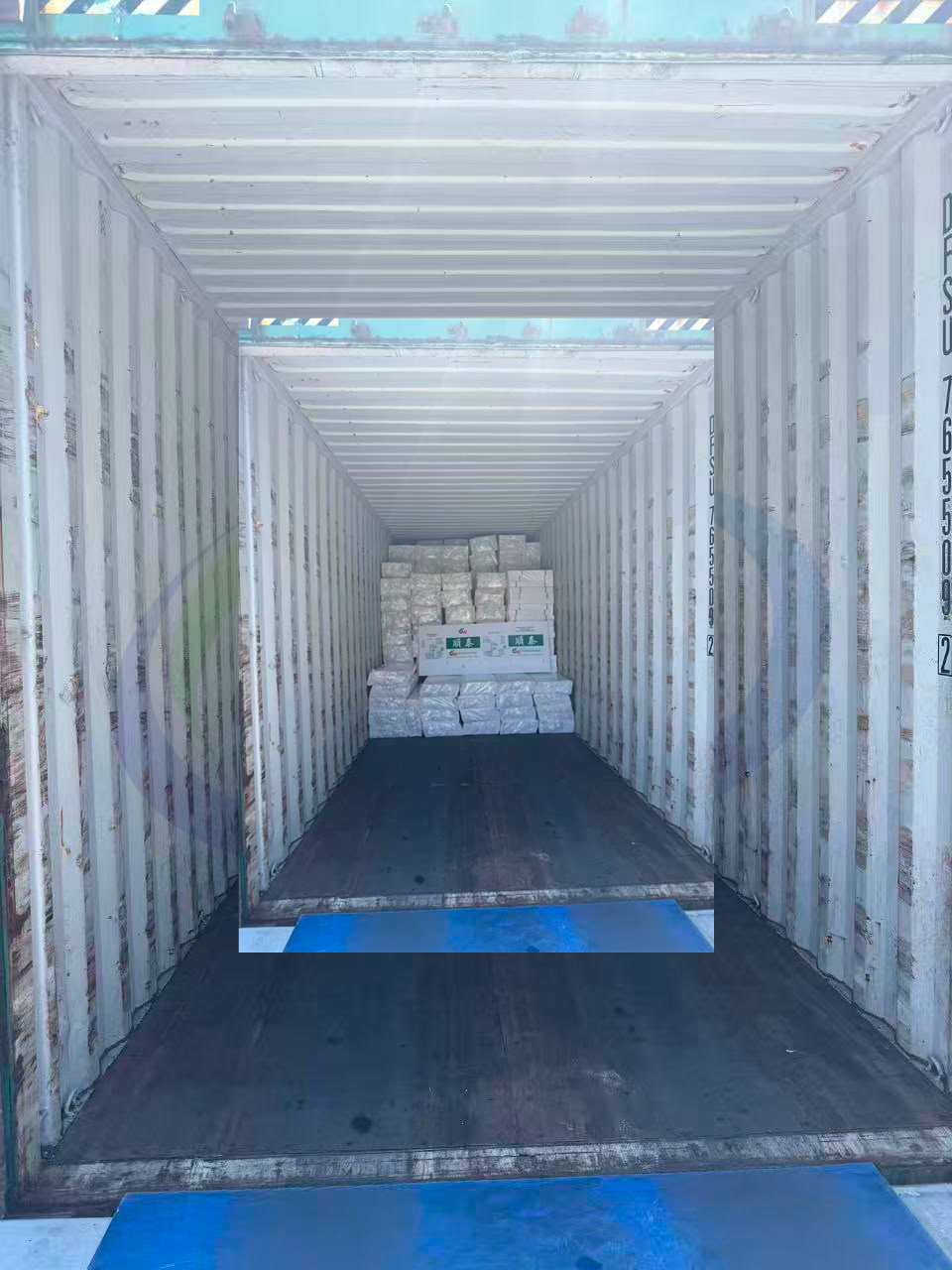
For certain standard configurations and depending on the order schedule, we can produce the equivalent quantity of one 40HQ container in approximately three days.
This capability gives customers greater flexibility when planning larger orders.
Different Box Requirements Need Different Production Processes
Not every plastic produce box should be manufactured in exactly the same way.
Depending on the customer’s design and application, different processes may be appropriate.
For example:
Heat Welding
Suitable for certain box structures where strong welded joints and production efficiency are required.
Ultrasonic Welding
Can be used for specific structures where precision and clean joining are important.
Five-Color High-Definition Printing
Useful when customers need branding, product information, handling instructions or other graphics printed directly onto the box.
This is one reason we encourage customers to share their existing box samples, drawings or basic requirements.
A simple photo, dimension or sample can often give our engineering team enough information to begin recommending an appropriate manufacturing approach.
Direct Manufacturer Supply Can Reduce Communication Layers
Another important part of our strategy is developing more direct relationships with U.S. customers.
Historically, a significant portion of our products reaching California has been supplied through intermediaries.
This model has helped us enter the market and understand customer requirements.
However, we also want to develop more direct cooperation with packaging companies, distributors and agricultural customers.
A direct relationship means that customers can communicate with the manufacturer about:
- Product specifications
- Material requirements
- Box dimensions
- Printing
- Welding
- Testing
- Production schedules
- Packaging
- Shipping
This can simplify communication and allow technical questions to be addressed more directly.
For customized plastic produce boxes, this can be especially valuable.
What We Learned from This Video Meeting
Perhaps the most important lesson from the conversation was that the market opportunity is real.
The customer was not questioning whether plastic packaging has advantages.
They had already seen customers move from waxed cartons to plastic packaging.
They had already worked with plastic corrugated box suppliers.
They already understood the product.
The real question was:
How can the industry make plastic packaging easier and more reliable for agricultural customers to purchase?
That means manufacturers need to think beyond the factory.
We need to understand the customer’s:
seasonality
inventory
lead time
cost structure
quality requirements
purchasing model
and supply-chain risks.
Only then can a plastic packaging supplier become a meaningful long-term partner.
An Opportunity for California and the U.S. West Coast
The U.S. West Coast represents an important market for agricultural packaging.
California and Arizona are major agricultural markets, while Washington and Oregon extend the potential market throughout the Pacific Northwest.
The connection with Mexico also adds another dimension to the regional supply chain.
For packaging companies serving these markets, having access to reliable international manufacturing capacity can provide an additional competitive advantage.
This is one of the reasons we are actively looking to expand our direct cooperation with customers in California and across the U.S. West Coast.
We believe the market is large enough for manufacturers, distributors and agricultural companies to create value together.
What Should U.S. Buyers Look for in a Plastic Produce Box Supplier?
Based on our experience and recent discussions with U.S. packaging companies, we believe buyers should look beyond the initial quotation.
When evaluating a plastic produce box supplier, consider at least six factors:
1. Product Cost
Can the supplier remain competitive after shipping and other landed costs?
2. Material Quality
Does the manufacturer understand material formulation and application requirements?
3. Production Capacity
Can the factory support larger seasonal orders?
4. Quality Testing
Does the supplier have actual testing capabilities rather than relying only on visual inspection?
5. Manufacturing Technology
Can the factory provide welding, printing and customized production?
6. Supply Reliability
Can the supplier communicate clearly and maintain predictable production schedules?
The lowest quotation does not always represent the lowest total cost.
A reliable supplier can help reduce unexpected problems throughout the supply chain.
Looking for a Plastic Produce Box Manufacturing Partner?
We are not trying to suggest that one supplier or one country can solve every agricultural packaging challenge.
The U.S. produce market is too diverse for that.
Instead, we believe the future lies in stronger cooperation between U.S. packaging companies and capable international manufacturers.
For companies serving California, Arizona, Mexico, Washington, Oregon and other West Coast markets, having another reliable manufacturing source can provide greater flexibility.
At Junhui Plastics, we bring together:
7 production lines
Experienced PP corrugated box manufacturing
Laboratory testing
Heat and ultrasonic welding
Five-color high-definition printing
Large-volume production capability
Customization experience
and direct communication with the factory.
If you are currently sourcing plastic produce boxes, PP corrugated boxes or reusable agricultural packaging, we would be happy to review your current box design, dimensions or application requirements.
You don’t need to prepare a complicated RFQ to start.
Send us a photo, drawing, dimensions or an existing sample specification, and our engineering team can evaluate the production requirements and recommend a suitable manufacturing solution.
Conclusion: The Next Opportunity Is Supply-Chain Cooperation
The shift from waxed cartons to plastic produce packaging is creating a significant opportunity in the U.S. agricultural market.
But the next stage of this transition will not be determined by product performance alone.
The winners will be the companies that can combine:
Competitive pricing
- Reliable quality
- Production capacity
- Fast manufacturing
- Technical support
- Supply reliability
The recent conversation with a major U.S. West Coast packaging company reinforced something we already believe:
The market is there. The demand is there. The opportunity is there.
The next challenge is connecting competitive manufacturing with the companies that already understand the U.S. agricultural market.
That is where we believe Junhui Plastics can play a role.