 ?>
Choosing the right formwork affects more than the cost of a construction project. It also influences concrete surface quality, material waste, and how often workers need to replace damaged panels.
Plywood remains a common choice because workers can cut and adjust it on-site. However, plastic formwork for concrete offers another option for contractors who want moisture-resistant panels and longer service life.
At Zibo Junhui Plastic Co., Ltd., we manufacture hollow polypropylene (PP) formwork for concrete construction. Our experience includes domestic construction trials and export orders for overseas building material distributors.
What Is Plastic Formwork for Concrete?
Plastic formwork provides a temporary surface that holds fresh concrete in shape while it gains strength.
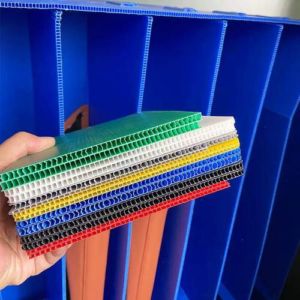
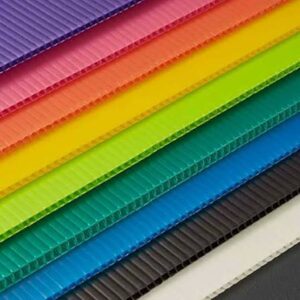
Our hollow panels use PP-based materials and an internal rib structure. This design creates hollow channels between the outer surfaces.
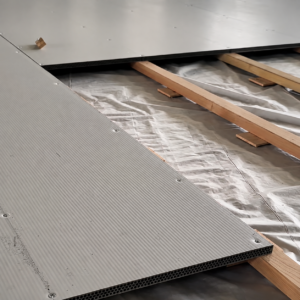
Contractors can use suitable formwork systems for walls, columns, beams, and floor slabs. However, every application needs proper support and installation.
Panel thickness alone does not determine safe load capacity. Therefore, contractors should confirm support spacing and engineering requirements before construction.
Why Do Contractors Choose Plastic Formwork?
1. Better Resistance to Moisture
Construction sites often expose formwork to rain, water, and wet concrete.
PP does not readily absorb water. As a result, plastic panels avoid some moisture-related problems that affect wood-based materials.
Plywood can also perform well in wet conditions when contractors select the correct grade and protect its surfaces. However, damaged coatings and exposed edges may allow water to enter.
2. Easier Cleaning and Concrete Removal
Our plastic formwork has a smooth contact surface.
During domestic construction trials, workers have removed our panels without release agents in certain applications.
In addition, workers can clean the panels after stripping and prepare them for another pour.
Actual results depend on the concrete mix, surface condition, and removal method.
3. Reuse Across Multiple Concrete Pours
One reason contractors consider plastic formwork for concrete is its reuse potential.
Since our development stage, Junhui Plastic has tested panels at construction sites in China.
Some 18 mm panels have completed more than 80 reuse cycles and remain usable, although their surfaces show minor scratches.
However, this experience does not guarantee the same lifespan for every project. Careful installation, stripping, cleaning, and storage all matter.
Plastic Formwork vs. Plywood: Cost per Use
Plywood often has a lower purchase price. In addition, workers can cut it into different shapes with familiar tools.
For one-time or irregular projects, these advantages may make plywood a practical choice.
However, repeated construction work requires a different cost comparison.
Consider the following illustrative prices in Chinese yuan:
| Item | Plywood | Hollow Plastic Formwork |
|---|---|---|
| Reference price per sheet | ¥50 | ¥133 |
| Assumed reuse cycles | 10 | 80 |
| Material cost per use | ¥5.00 | ¥1.66 |
The calculation is straightforward:
Material cost per use = Purchase price ÷ Successful reuse cycles
In this example, plastic formwork has a higher initial price but a lower material cost per use.
However, these figures represent a simplified comparison, not verified savings from the same construction project. The reference panels also have different dimensions.
For a fair purchasing decision, contractors should compare equivalent formwork areas and include labor, supports, repairs, and transportation.
If a recycling program offers a confirmed residual payment, that value may further reduce the net material cost.
Available Specifications and Customization
Junhui Plastic manufactures hollow plastic formwork in several thicknesses:
- 12 mm
- 15 mm
- 18 mm
- 20 mm
Our most common export options are 15 mm and 18 mm.
We offer 1220 × 2440 mm panels, along with custom dimensions, colors, and PP formulations.
In addition, our factory supports cutting and drilling.
Buyers should compare panel weight, material formulation, and test information before choosing a specification.
Real Export Case: 13,000 Panels for Vietnam
A building material distributor in Vietnam ordered plastic formwork for concrete for residential construction.
The order included:
| Item | Specification |
|---|---|
| Thickness | 18 mm |
| Dimensions | 1220 × 2440 mm |
| Weight | 23 kg per sheet |
| Color | Gray |
| Quantity | 13,000 sheets |
| Application | Residential construction |
Our factory completed production and shipped the order to Vietnam.
The shipment has arrived, although we do not yet have confirmed construction performance data from this customer.
This project illustrates our experience supplying large-volume orders to overseas distributors.
What Should Buyers Check Before Ordering?
Before purchasing plastic formwork for concrete, consider the following questions:
- Does the panel meet the project’s engineering requirements?
- What thickness, weight, and dimensions does the supplier offer?
- Can the supplier provide relevant testing information?
- Does the manufacturer have actual construction experience?
- What are the expected production and delivery schedules?
- How will the contractor clean, store, and reuse the panels?
At Junhui Plastic, six production lines focus on plastic formwork, with a daily production capacity of approximately 100 metric tons.
Our general minimum order quantity is 3 metric tons. We can typically prepare samples within one day, while standard production takes around 3–5 days.
Actual schedules depend on the order specifications and factory workload.
Frequently Asked Questions
Can plastic formwork replace plywood?
Yes, in suitable applications. However, contractors must confirm the formwork system’s load capacity, support requirements, and installation method.
How many times can plastic formwork be reused?
Some Junhui Plastic panels have exceeded 80 reuse cycles in domestic construction trials. Actual results vary by project and handling conditions.
Is plastic formwork cheaper than plywood?
Not always at the time of purchase. However, a reusable panel may offer a lower cost per use when contractors achieve enough successful cycles.
Conclusion
Plastic formwork for concrete can offer practical advantages for projects that require repeated concrete pours.
Its moisture resistance, smooth surface, and reuse potential make it worth comparing with traditional plywood.
At Zibo Junhui Plastic Co., Ltd., we manufacture customizable PP hollow formwork for construction companies and building material distributors.
Looking for plastic formwork for your next project? Send us your required thickness, panel dimensions, estimated quantity, and application. Our team can review your specifications and prepare a quotation.