 ?>
When choosing packaging materials, buyers often compare corrugated plastic vs cardboard based on the initial purchase price. Cardboard is familiar, affordable, and widely used for one-way shipping. But for products that need protection from moisture, repeated handling, or long-term reuse, corrugated plastic can offer a different cost and performance profile.
So, which material is better? The answer depends on how the packaging will be used, how long it needs to last, and what conditions it will face during transportation and storage.
Corrugated Plastic vs Cardboard: What Is the Difference?
Cardboard is a paper-based packaging material designed for many short-term shipping applications. It is lightweight and economical, but its performance can change quickly when exposed to water or high humidity.
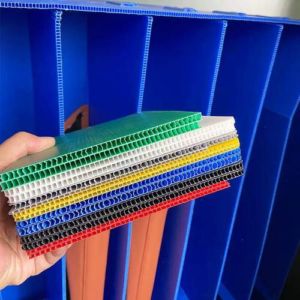
Corrugated plastic sheets are typically made from polypropylene (PP). They have a fluted hollow structure that provides strength while keeping the material relatively lightweight. PP corrugated sheets can also be converted into boxes, dividers, layer pads, trays, and other custom packaging products.
At Junhui Plastics, PP corrugated sheets can be produced with different PP formulations, including 100% virgin PP. For applications where consistent strength and durability are important, we use virgin PP rather than recycled material.
Moisture Resistance Matters in Real-World Shipping
One of the biggest differences when comparing corrugated plastic vs cardboard is how they perform around water and moisture.
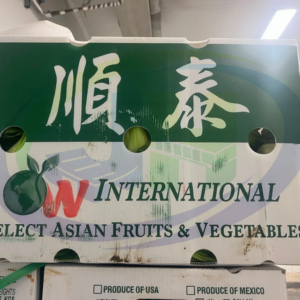
This is especially important in agricultural exports. Produce may be transported in refrigerated containers, where temperature changes can create condensation. When cardboard absorbs moisture, it can lose strength and become damaged during transportation.
For example, agricultural customers shipping produce internationally may need packaging that remains stable inside refrigerated containers. A wet cardboard box can become soft or lose its structural strength, increasing the risk of packaging failure.
Corrugated plastic does not absorb water in the same way. It can be washed with water, and after wiping the surface with a paper towel, the box can quickly dry and return to service.
The same consideration applies when transporting plants, fruit trees, and other products during rainy weather. Wind and rain can expose packaging to water during loading, unloading, and transportation. In these situations, moisture-resistant PP packaging can provide an additional layer of protection.
Reusability Can Change the Total Packaging Cost
The purchase price is only one part of packaging cost.
Cardboard boxes are generally designed for short-term or one-way use. Depending on the application, a cardboard box may only be suitable for one or a small number of shipping cycles before its strength decreases.
A properly designed PP corrugated box can be reused repeatedly. Junhui has a real customer example that demonstrates the potential service life of this type of packaging: boxes manufactured in August 2018 are still being used by the customer today.
That does not mean every PP box will automatically last for the same period. Actual service life depends on product weight, handling conditions, cleaning, transportation frequency, and storage environment. However, long-term reuse can significantly change the economics of reusable packaging.
Instead of comparing only the price of one box, buyers should consider:
- Initial purchase cost
- Number of shipping cycles
- Replacement frequency
- Cleaning and maintenance
- Transportation conditions
- Risk of packaging damage
- Product protection
For companies that use packaging repeatedly, the cost per use can be more meaningful than the initial unit price.
Where Does Corrugated Plastic Make Sense?
The right choice depends on the application.
Cardboard can still be practical when packaging is used for one-way shipping, the environment is dry, and the lowest initial cost is the main consideration.
Corrugated plastic becomes more attractive when packaging needs to withstand moisture, repeated handling, cleaning, or long-term use.
Junhui has supplied PP packaging for different industries, including agricultural customers in Los Angeles, California, and automotive parts applications in Australia.
Typical applications include:
- Fresh produce and agricultural packaging
- Automotive parts packaging
- Reusable transport boxes
- Industrial packaging
- Dividers and separators
- Layer pads
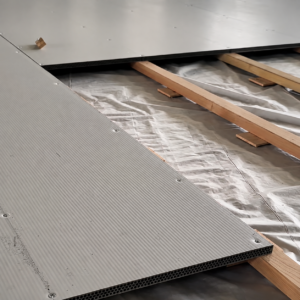
- Protection boards
- Custom PP corrugated boxes
Custom PP Corrugated Packaging
Another advantage of PP corrugated packaging is design flexibility.
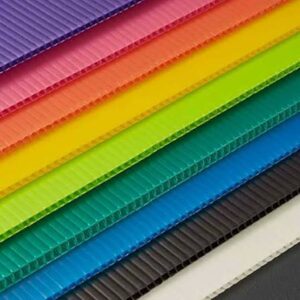
Junhui can customize PP corrugated products in different sizes, colors, thicknesses, and structures. Standard packaging applications commonly use 3–5 mm sheets, while other thicknesses can be selected according to the application.
Our production capabilities include cutting, creasing, welding, heat sealing, die cutting, printing, riveting, folding, and box assembly. Custom sizes and colors are also available.
The material can also be customized for specific requirements, such as anti-static, flame-retardant, UV-resistant, food-grade, and conductive/ESD applications.
This allows buyers to develop packaging around the product instead of simply adapting the product to a standard box.
Which Material Should You Choose?
There is no single answer for every packaging application.
If you need economical, short-term packaging for a dry shipping environment, cardboard may remain a practical option.
If your packaging needs to handle moisture, repeated transportation, cleaning, or long-term reuse, corrugated plastic is worth considering.
The best comparison is not simply corrugated plastic vs cardboard by unit price. A better approach is to compare the complete packaging cycle, including durability, replacement frequency, product protection, and cost per use.
Need help choosing between PP corrugated plastic and cardboard for your application? Send us your box dimensions, product weight, photos, and estimated quantity. Our engineering team can recommend a suitable PP sheet thickness, structure, and manufacturing process for your packaging requirements.