 ?>
Choosing a corrugated plastic sheet manufacturer is not simply about finding the lowest price. For importers, distributors, packaging companies, and industrial buyers, the real question is whether a supplier can consistently produce the right material, meet your specifications, maintain stable quality, and deliver orders on time.
Two sheets may look almost identical in a quotation, but their PP content, GSM, production process, and actual performance can be very different.
Before placing a bulk order, here are the key factors worth checking.
1. Check the PP Material and Formula
PP, or polypropylene, is the main material used to produce corrugated plastic sheets. However, not every sheet contains the same amount of PP.
A reliable supplier should be able to clearly explain its material composition and adjust the formula according to the application and budget.
At Junhui Plastics, the PP content can be customized from 50% to 100% according to the customer’s requirements. We primarily use virgin PP material, while the material composition can be adjusted for different price and performance requirements.
This gives buyers more flexibility. A packaging divider for short-term use may have different material requirements from a heavy-duty sheet used repeatedly in industrial applications.
The important point is to ask the manufacturer exactly what is included in the material rather than comparing prices based only on thickness.
2. Compare Thickness and GSM
Thickness is one of the first specifications buyers usually check, but it should not be considered alone.
GSM, or grams per square meter, also affects the weight and overall structure of a corrugated plastic sheet. If two suppliers quote the same thickness but different GSM, their products may not perform the same way.
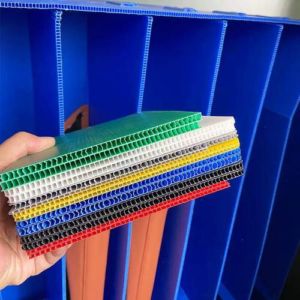
Junhui currently produces sheets from 2 mm to 10 mm, with GSM ranging from approximately 200 to 1,500 g/m². The maximum production width is 3 meters, while 1220 × 2440 mm is one of the common sheet sizes.
For a purchasing team, it is useful to request both thickness and GSM on the quotation. This makes it easier to compare products from different suppliers on a more consistent basis.
3. Look at the Manufacturer’s Production Capability
A supplier’s production capacity becomes particularly important when you need regular supply or large quantities.
Ask simple questions:
- How many production lines does the factory have?
- What is the annual production capacity?
- Can the factory handle urgent orders?
- Are cutting, printing, welding, and other processes handled in-house?
- Can the manufacturer produce different specifications without relying heavily on outside suppliers?
Junhui Plastics currently operates 12 production lines, with an annual production capacity of approximately 48,000 tons.
More importantly, the production process can be handled in-house, including design, material mixing, extrusion forming, cutting, welding, and printing.
For buyers, this can simplify communication. Instead of discussing material with one supplier, printing with another, and finishing with a third party, more of the process can be coordinated directly with the manufacturer.
4. Ask How Quality Is Actually Tested
“Quality guaranteed” is easy to write on a website. The more useful question is: How do you actually check the product?
A professional corrugated plastic sheet manufacturer should have a clear quality control process from raw materials to finished products.
At Junhui, quality inspection covers the production process from raw materials through finished sheets. The factory has laboratory equipment for tests such as raw material composition analysis, puncture testing, drop testing, and compression testing.
Each batch is inspected, and samples are retained after production.
Keeping production samples is also useful after delivery. If a customer has a question about a previous order, the retained sample can help the production team trace and review the original batch.
This type of quality-control process is much more meaningful to buyers than simply seeing a general statement about “strict QC.”
5. Request Samples Before a Bulk Order
A sample can answer questions that a quotation cannot.
Before committing to a large order, buyers can check whether the sheet works with their actual cutting, folding, printing, packaging, or transportation process.
Junhui can provide samples for customers to evaluate. Once the sample dimensions are confirmed, sample production can normally be completed in about two days.
MOQ depends on the specific product and processing requirements, so buyers should confirm the minimum order quantity together with the quotation.
For a new supplier, starting with samples or a smaller trial order can also help both sides confirm specifications before moving into regular production.
6. Check Customization and Processing Capability
Corrugated plastic sheets are often purchased for specific applications, so standard sizes may not always be enough.
A capable manufacturer should be able to discuss more than just thickness.
Depending on the application, Junhui can customize:
- Sheet dimensions
- Thickness and GSM
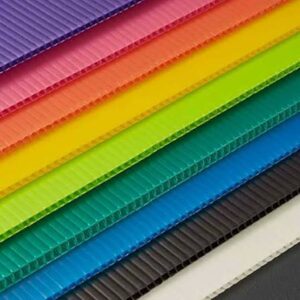
- Colors
- Styles
- Printing
- Cutting
- Welding
Having these processes available in-house can reduce communication between different suppliers and make customized orders easier to manage.
For distributors, this can also be useful when different customers require different sizes or printed designs.
7. Check Lead Time and Export Experience
Price is important, but delivery time can directly affect inventory and customer commitments.
Junhui’s standard production lead time is generally around 7 days, while larger orders normally take around 10 days, depending on product specifications and order quantities.
The company has supplied products to customers in more than 30 countries, including the United States, Australia, Mexico, Vietnam, the Philippines, Thailand, Pakistan, South Africa, and Honduras.
Export experience matters because international orders involve more than production. Packaging, loading, documentation, communication, and delivery coordination all become part of the purchasing process.
8. Look for Relevant Customer Experience
One of the simplest ways to evaluate a manufacturer is to ask whether it has produced similar products for your industry.
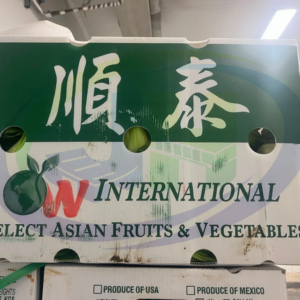
For example, a distributor in Los Angeles purchases Junhui’s PP hollow plastic boxes for transporting vegetables from farms to supermarkets. The customer has placed repeat orders after using the boxes in actual agricultural transportation.
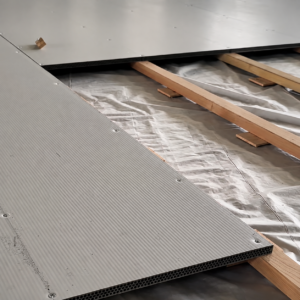
In Australia, Junhui supplies PP corrugated sheets used as protective pads for automotive parts. The sheets help keep components in position and reduce movement during transportation. The customer is using the pads repeatedly in a returnable packaging system.
These examples show why industry experience matters. The right manufacturer should understand not only how to make the sheet, but also how the product is expected to perform in the customer’s application.
Final Checklist Before Choosing a Manufacturer
Before selecting a supplier, ask for clear answers about:
- PP material and composition
- Thickness and GSM
- Maximum sheet size
- Custom colors and dimensions
- Production capacity
- In-house processing
- Quality testing
- Sample availability
- MOQ
- Production lead time
- Packaging options
- Export experience
- Similar customer applications
The cheapest quotation is not always the most useful comparison. A better approach is to compare the material, specifications, production capability, quality control, lead time, and actual application experience behind the price.
If you are looking for a corrugated plastic sheet manufacturer for packaging, industrial protection, agricultural transportation, or customized PP products, providing your required thickness, size, GSM, quantity, and application will allow the manufacturer to recommend a suitable production specification before you place a bulk order.