 ?>
When a shipment reaches its destination, what happens to the empty boxes?
For manufacturers running regular deliveries between factories, warehouses, and customers, throwing away packaging after every trip can become expensive.
That’s why reusable plastic boxes are worth considering, especially when the containers can be folded for return transportation.
Made from polypropylene (PP) corrugated sheets, these boxes offer moisture resistance, customizable structures, and practical options for repeated handling.
Why Choose Reusable Corrugated Plastic Boxes?
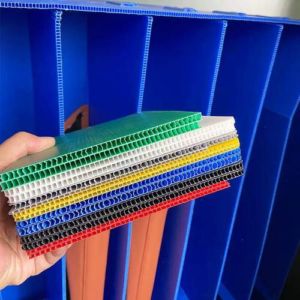
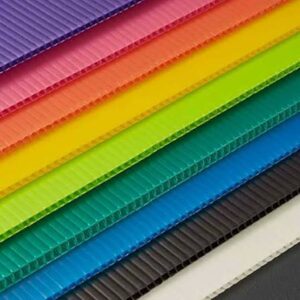
Corrugated plastic boxes use lightweight PP sheets with hollow internal channels.
Unlike cardboard, polypropylene does not readily absorb water. The boxes can also be wiped down or washed when the application allows.
For businesses managing repeat shipments, these features can help reduce packaging replacement.
Common applications include automotive components, manufacturing parts, agricultural products, and warehouse transfers.
However, not every logistics operation benefits equally. Reusable packaging works best when companies have a reliable system for collecting and returning empty containers.
Foldable Plastic Boxes: A Practical Logistics Solution
Foldable designs are among the corrugated plastic packaging products frequently exported by Zibo Junhui Plastic Co., Ltd.
A foldable box can be assembled for shipping and flattened after unloading.
This reduces the space needed for empty-container storage and may improve return transportation efficiency.
The actual space savings depend on the box dimensions, folding structure, and how the flattened boxes are stacked.
For manufacturers shipping components between established facilities, this flexibility can be particularly valuable.
Hook-and-Loop Closures or Ultrasonic Welding?
Not all reusable plastic boxes need the same construction.
At Junhui Plastic, we manufacture customized foldable boxes using different assembly and fastening methods.
| Feature | Hook-and-Loop Fasteners | Ultrasonic Welding |
|---|---|---|
| Main Function | Reopenable fastening | Permanent joining of suitable plastic parts |
| Typical Use | Foldable flaps and closures | Box seams and structural joints |
| Key Advantage | Convenient opening and closing | Consistent joints when properly designed |
| Design Consideration | Fastener placement and wear | Weld geometry and joint strength |
These methods are not necessarily alternatives.
A single box may use ultrasonic-welded side seams together with hook-and-loop closures.
For example, a foldable automotive parts box might require a strong welded body and reopenable flaps for frequent loading.
The best arrangement depends on the product weight, handling method, and expected reuse frequency.
What Makes a Good Returnable Packaging Design?
A box that survives one shipment isn’t automatically suitable for repeated use.
Buyers should evaluate the entire handling process.
Product Fit
The internal dimensions should match the products being transported. Custom dividers can help prevent components from rubbing against one another.
Stacking Requirements
Box height, sheet weight, flute direction, and joint construction can influence stacking performance.
Folding and Reassembly
Hinges, creases, and fastening points should remain functional through the expected handling cycles.
Empty Return
The folded dimensions should work with the customer’s storage space and return transportation method.
A successful design balances protection during outbound shipping with practical handling on the return trip.
How Does Junhui Plastic Test Its Boxes?
At Junhui Plastic, products undergo inspection and applicable testing before shipment.
Our laboratory capabilities include drop, compression, puncture, and raw material composition testing.
The exact test plan depends on the customer’s product and acceptance requirements.
For example:
- Drop testing evaluates how a loaded box responds to impact during handling.
- Compression testing helps assess performance under stacking loads.
- Puncture testing evaluates resistance to localized penetration.
- Material analysis helps verify the specified raw material composition.
A product must meet its agreed inspection and test requirements before release for delivery.
For buyers, this matters more than a general claim that a box is “heavy-duty.”
Reusable Plastic Boxes vs Disposable Cardboard
Cardboard often has a lower initial purchase price. For one-way shipments, it may remain the more economical option.
Reusable plastic boxes involve a different cost calculation.
Buyers should consider the number of completed trips, replacement frequency, cleaning expenses, and empty-container return costs.
For example, a box costing $6 and completing three successful trips would have a purchase cost of $2 per trip, before return and maintenance expenses.
That is only an illustration, not a verified customer saving.
The real comparison should use the customer’s actual shipping data.
Choosing the Right Sheet Specification
Thickness alone cannot determine box strength.
At Junhui Plastic, commonly used PP corrugated sheet thicknesses include 3 mm, 5 mm, 6 mm, and 8 mm.
GSM, or grams per square meter, is another important factor.
A heavier sheet may offer different mechanical performance, but the complete box design—including its folds, seams, and closures—must also be evaluated.
Before ordering, provide the loaded weight, box dimensions, stacking height, and expected handling conditions.
Custom Manufacturing and Lead Times
Junhui Plastic offers cutting, creasing, die cutting, welding, heat sealing, riveting, printing, and box assembly.
We can also customize colors, dimensions, internal partitions, and fastening arrangements.
Sample preparation typically takes around two days, depending on design complexity.
Production orders generally require 5–10 days, subject to specifications, quantity, and scheduling.
Minimum order quantities vary by product.
Frequently Asked Questions
Are foldable plastic boxes suitable for repeated shipping?
Yes, when the design, material, and fastening system meet the required handling conditions.
Can ultrasonic welding and hook-and-loop fasteners be used together?
Yes. Welded joints can form part of the box structure, while hook-and-loop fasteners provide reopenable closures.
How long do reusable plastic boxes last?
Service life depends on load, handling frequency, storage conditions, and design. It should be evaluated for the intended logistics cycle.
Can reusable plastic boxes be recycled?
Polypropylene is recyclable where suitable collection and processing facilities are available.
Final Thoughts
Reusable plastic boxes offer more than an alternative to cardboard.
For businesses with repeat shipping routes, foldable PP corrugated boxes can combine product protection with more practical empty-container handling.
At Zibo Junhui Plastic Co., Ltd., we manufacture custom foldable packaging with different closure systems and customer-specific quality testing.
Planning a returnable packaging project? Share your product dimensions, loaded weight, shipping route, and folding requirements. Our team can help develop a suitable design and prepare samples for evaluation.