 ?>
When glass bottles move through a beverage plant, the layer pads between them rarely get much attention—until something goes wrong.
A damaged separator can affect pallet stability, slow down handling, or create additional packaging costs.
For breweries, beverage manufacturers, and glass bottle suppliers, bottle layer pads help separate stacked products and provide a consistent surface between pallet layers.
At Zibo Junhui Plastic Co., Ltd., we manufacture polypropylene (PP) corrugated layer pads for beverage packaging, including glass bottles and metal cans.
Why Are Layer Pads Important in Beverage Packaging?
Beverage manufacturers often move large quantities of bottles or cans on pallets.
Layer pads separate each level of products, helping maintain an organized stacking arrangement during storage and transportation.
The requirements vary depending on the container.
Empty glass bottles need stable separation and careful handling. Filled beverage cans introduce different loading conditions because of their weight and contact surfaces.
The layer pad must work with the complete pallet arrangement, including product dimensions, stacking height, and handling equipment.
Why Choose PP Bottle Layer Pads Instead of Cardboard?
Cardboard separators remain common because they are inexpensive and easy to source.
However, they can lose strength when exposed to moisture or repeated handling.
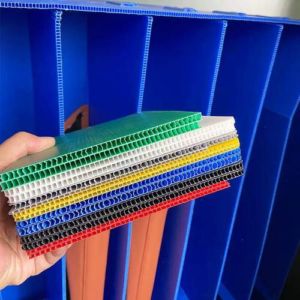
PP corrugated sheets offer several practical advantages:
- Moisture resistance: Polypropylene does not readily absorb water.
- Reusable construction: Suitable pads can be inspected and used again.
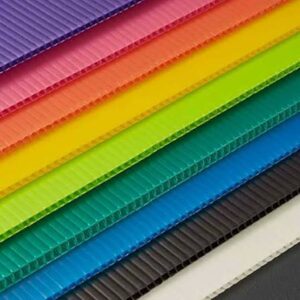
- Custom specifications: Thickness, GSM, color, and dimensions can be adjusted.
- Easy cleaning: Pads can be wiped or washed when required.
- Edge finishing: Sealed edges and rounded corners are available.
For beverage plants with established returnable packaging systems, bottle layer pads made from PP can be a useful alternative to disposable separators.
Real Order: Custom PP Layer Pads for Beverage Cans
A recently confirmed order involved layer pads for tinplate beverage cans in a Coca-Cola-related packaging application.
The customer selected the following specifications:
| Specification | Order Details |
|---|---|
| Material | PP corrugated sheet |
| Thickness | 4 mm |
| Weight | 900 gsm |
| Color | Red |
| Edge Treatment | Sealed edges |
| Application | Tinplate beverage can packaging |
The customer had concerns about cardboard layer pads developing indentations under the contact points of stacked cans.
For this application, the customer selected a heavier PP sheet to provide a more suitable separation surface.
The sealed edges also gave the pads a finished perimeter for handling.
This order highlights an important purchasing consideration: the correct layer pad depends on the product being stacked.
Although glass bottles and beverage cans share similar palletizing processes, their weight distribution and contact geometry can differ.
The 4 mm, 900 gsm specification was selected for this particular order. It should not be treated as a universal requirement for every beverage pallet.
What Thickness Is Common for Glass Bottle Packaging?
At Junhui Plastic, 3 mm PP corrugated sheets are commonly requested by customers in the beer and beverage industries.
However, thickness alone cannot determine whether a pad is suitable.
GSM, internal rib structure, pallet dimensions, and stacking conditions also affect performance.
For example, a 3 mm sheet may work for one bottle arrangement, while another application may require a different material weight or structure.
When evaluating bottle layer pads, buyers should provide bottle dimensions, product weight, and maximum stacking height.
Sample testing is the most reliable way to confirm the specification.
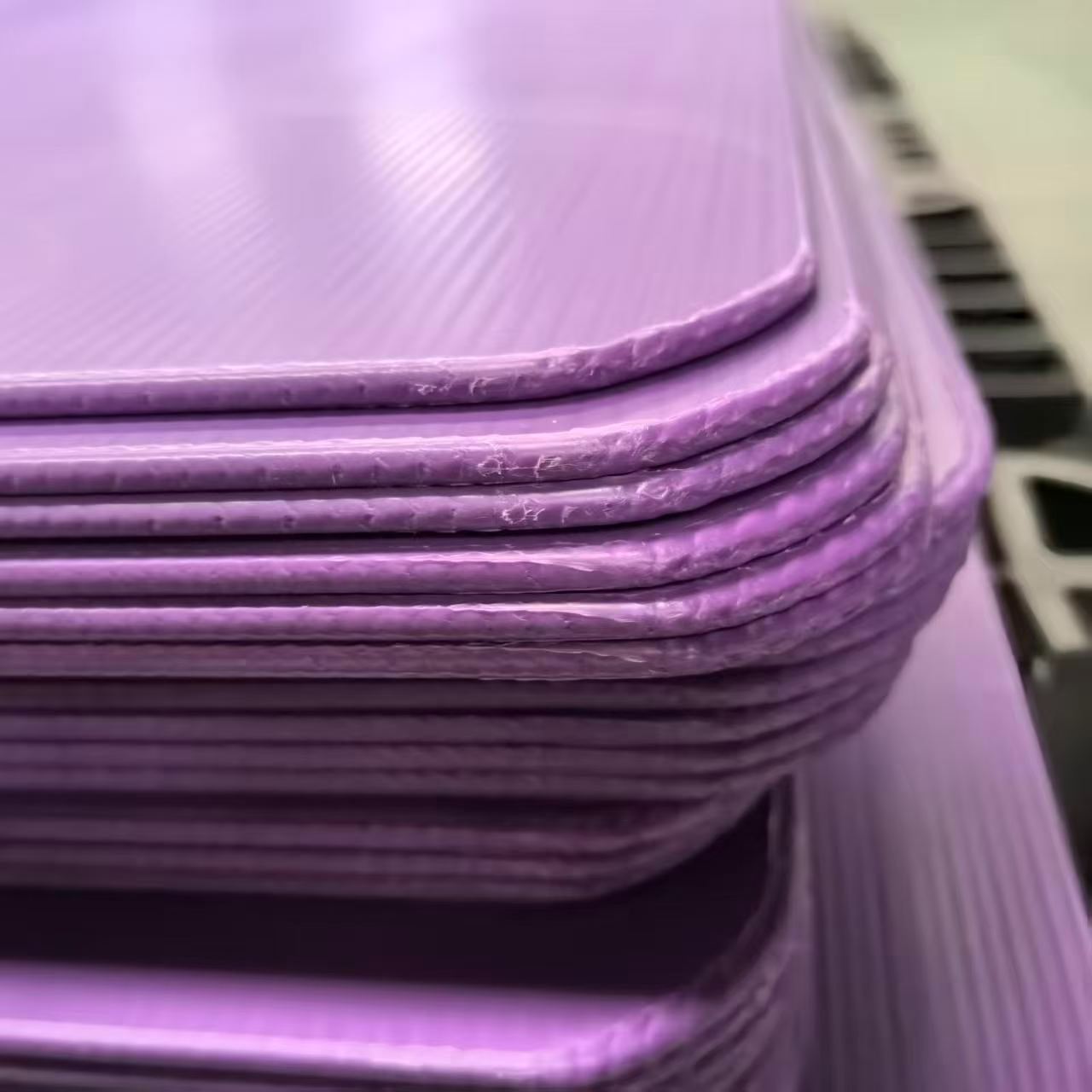
Why Does Edge Sealing Matter?
The perimeter of a layer pad affects how it is handled and maintained.
Junhui Plastic offers plain-cut edges, rounded corners, and four-side heat-sealed designs.
For the recent beverage can order, the customer selected sealed edges.
This finishing method closes the exposed channels along the sheet perimeter and creates a more finished edge.
The best option depends on the customer’s handling equipment, cleaning procedures, and product requirements.
Buyers should also consider whether the pads will be handled manually or used with automated palletizing systems.
Can PP Layer Pads Reduce Packaging Costs?
PP pads often have a higher initial purchase price than basic cardboard separators.
However, purchase price alone doesn’t show the full cost of a reusable packaging system.
Buyers should consider:
- Replacement frequency
- Number of successful reuse cycles
- Cleaning and inspection expenses
- Return transportation costs
- Product damage and handling requirements
A reusable pad may reduce repeated purchases when it can complete enough trips.
For one-way shipments, cardboard may still be the more economical option.
The right comparison depends on actual operating data.
What Should Buyers Confirm Before Ordering?
Before requesting bottle layer pads, prepare the following information:
- Pallet dimensions
- Bottle or can dimensions and weight
- Number of products per layer
- Maximum stacking height
- Required thickness and GSM
- Edge finishing requirements
- Estimated order quantity
At Junhui Plastic, we offer customized cutting, heat sealing, and other PP corrugated sheet processing services.
Our laboratory capabilities include compression, puncture, and raw material composition testing.
Sample preparation typically takes around two days, depending on design complexity.
Production lead times generally range from 5–10 days, subject to specifications, order quantity, and scheduling.
Frequently Asked Questions
Are PP layer pads suitable for glass bottles?
Yes. They can be used in glass bottle palletizing systems when the specification matches the load and handling conditions.
Can the same pads be used for beverage cans?
Potentially, but the required thickness, GSM, and dimensions should be evaluated separately.
Are bottle layer pads reusable?
Yes. Reuse depends on the condition of the pads, handling requirements, and the return system.
Final Thoughts
Choosing the right bottle layer pads means understanding the products, pallet arrangement, and transportation conditions.
For glass bottles and beverage cans, PP corrugated sheets offer moisture resistance, customizable dimensions, and options for repeated use.
At Zibo Junhui Plastic Co., Ltd., we manufacture customized PP layer pads for beverage and industrial packaging applications.
Need custom layer pads? Share your pallet dimensions, product weight, stacking requirements, and estimated order quantity. Our team can help evaluate a suitable specification and prepare samples.