 ?>
How to Choose a Corrugated Plastic Box Manufacturer
Choosing a corrugated plastic box manufacturer involves more than comparing prices. A box that looks fine in a product photo may not perform well after repeated loading, stacking, and transportation.
For packaging distributors and industrial buyers, the right supplier should understand how the box will be used, recommend suitable materials, and verify the finished design before production.
Here are seven things to check before placing an order.
1. Check the Manufacturer’s Material Options
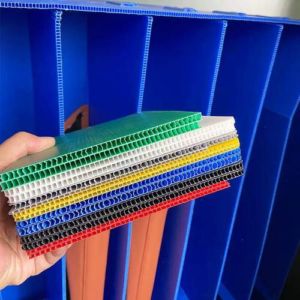
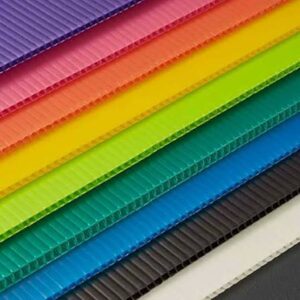
Corrugated plastic boxes are commonly made from polypropylene (PP) sheets with hollow internal ribs.
However, two sheets with the same thickness can perform differently.
Ask suppliers about thickness, GSM (grams per square meter), PP content, and available additives.
At Zibo Junhui Plastic Co., Ltd., we customize material formulations based on application requirements and budget. Options include UV-resistant, anti-static, conductive, and flame-retardant formulations.
A reliable corrugated plastic box manufacturer should explain why a particular specification suits your packaging rather than simply recommend the heaviest sheet.
2. Evaluate Custom Manufacturing Capabilities
Industrial packaging rarely follows one standard design.
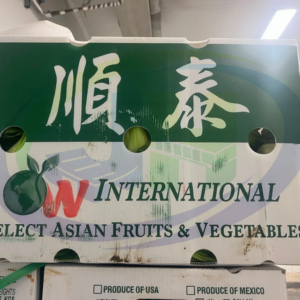
A vegetable box may need ventilation and convenient handling, while an automotive parts container may require partitions and cushioning.
Junhui Plastic offers cutting, creasing, die cutting, printing, heat sealing, ultrasonic welding, riveting, and box assembly.
Our common structures include foldable boxes, carton-style containers, reinforced boxes, and lidded designs.
Foldable boxes can also incorporate hook-and-loop fasteners for repeated opening and closing.
Before ordering, confirm whether your supplier can produce the complete design, including its internal packaging components.
3. Choose a Corrugated Plastic Box Manufacturer With Design Experience
One of the best ways to evaluate a supplier is to ask how it solves actual packaging problems.
Recently, a customer contacted Junhui Plastic about automotive evaporator packaging.
The customer had been using cardboard dividers, but they became damaged after several handling cycles.
The proposed replacement uses custom PP corrugated partitions shaped around each evaporator.
Individual compartments help separate components and reduce contact during transportation.
The dividers can also be combined with foldable PP boxes for returnable logistics.
This project illustrates why packaging development should begin with the product’s dimensions, weight, and handling conditions—not simply an existing box size.
4. Review Quality Testing Procedures
A supplier’s quality control process deserves as much attention as its production equipment.
At Junhui Plastic, products must meet agreed inspection and testing requirements before shipment.
Our laboratory capabilities include:
| Test | Purpose |
|---|---|
| Drop testing | Evaluate impact during handling |
| Compression testing | Assess performance under stacking loads |
| Puncture testing | Check resistance to localized penetration |
| Material analysis | Verify raw material composition |
Testing should reflect the intended application.
For example, a loaded automotive parts box may require different acceptance criteria from a lightweight produce container.
Buyers can also refer to ASTM D642, a standard covering compression testing of shipping containers.
Ask your supplier which procedures it uses and whether relevant test records are available.
5. Confirm Sampling and Delivery Times
When evaluating a corrugated plastic box manufacturer, ask how long each development stage takes.
At Junhui Plastic, sample preparation typically takes approximately two days, depending on design complexity.
Production generally takes 5–10 days, subject to order quantity, specifications, and scheduling.
Minimum order quantities vary by product.
Before confirming an order, clarify whether the quoted lead time begins after drawing approval, sample confirmation, or another agreed milestone.
For overseas buyers, this helps prevent delays caused by unclear expectations.
6. Compare Total Packaging Costs
The lowest quotation doesn’t always represent the best value.
Sheet thickness, GSM, material formulation, printing, and processing all influence the final price.
For reusable packaging, buyers should also consider replacement frequency, cleaning expenses, and empty-container return costs.
A foldable box may reduce the space required for return transportation, but actual savings depend on the logistics system.
Ask suppliers to explain their material recommendations and pricing differences.
A useful quotation should make it easier to compare both specifications and long-term operating costs.
7. Evaluate Communication and Technical Support
Packaging projects often change after the first sample.
Customers may request different divider spacing, stronger joints, or revised closure positions.
An experienced corrugated plastic box manufacturer should review these requests, explain possible trade-offs, and confirm updated drawings before production.
For international buyers, clear communication is especially important.
Make sure your supplier understands the intended loading method, stacking height, and transportation environment.
Questions to Ask Before Ordering
Before selecting a supplier, prepare these details:
- Product dimensions and loaded weight
- Quantity of products per box
- Required box structure and dividers
- Stacking and transportation conditions
- Expected reuse requirements
- Required inspection or testing criteria
Providing accurate information helps manufacturers recommend suitable specifications and prepare meaningful quotations.
Final Thoughts
The right corrugated plastic box manufacturer should offer more than competitive pricing.
Material knowledge, custom design capabilities, quality testing, and reliable communication all contribute to successful packaging projects.
At Zibo Junhui Plastic Co., Ltd., we manufacture customized PP corrugated boxes for agricultural, automotive, and industrial applications.
Looking for a manufacturing partner? Send us your product drawings, packaging dimensions, estimated quantity, and application requirements. Our team can review your project and prepare samples and a quotation.