 ?>
Choosing between a plastic box vs cardboard box is not always as simple as comparing the price per piece.
Cardboard is inexpensive, widely available, and works well for many one-way shipments. Corrugated plastic costs more in many standard applications, but it can be washed, folded, reused, and designed for demanding environments.
For businesses shipping produce, automotive parts, garments, or products moving through a closed-loop supply chain, the better question is often: How much does the packaging cost per trip?
Let’s compare the two based on real packaging applications.
Plastic Box vs Cardboard: Quick Comparison
SEO Title: Plastic Box vs Cardboard: Cost, Durability & Reuse Compared
Meta Description: Plastic box vs cardboard: compare cost, durability, water resistance, reuse, cleaning, and recycling to choose the right packaging for your business.
Primary Keyword: plastic box vs cardboard
Search Intent: Commercial
Corrugated Plastic Boxes vs Cardboard Boxes: Which Is Better for Your Business?
Choosing between a plastic box vs cardboard box is not always as simple as comparing the price per piece.
Cardboard is inexpensive, widely available, and works well for many one-way shipments. Corrugated plastic costs more in many standard applications, but it can be washed, folded, reused, and designed for demanding environments.
For businesses shipping produce, automotive parts, garments, or products moving through a closed-loop supply chain, the better question is often: How much does the packaging cost per trip?
Let’s compare the two based on real packaging applications.
Plastic Box vs Cardboard: Quick Comparison
| Factor | Corrugated Plastic Box | Cardboard Box |
|---|---|---|
| Initial Cost | Usually higher for standard boxes | Usually lower |
| Water Resistance | Excellent | Poor without coating |
| Reusability | Designed for repeated use | Often used for one-way shipping |
| Cleaning | Can be washed and wiped clean | Difficult to wash |
| Folding | Yes | Yes |
| Custom Printing | Yes | Yes |
| Durability | Suitable for repeated handling | More vulnerable to moisture and crushing |
| End of Life | PP material can be recycled where facilities exist | Recyclability depends on coatings and contamination |
| Best Fit | Reusable and wet-environment packaging | One-way and dry-environment shipping |
Neither option is automatically better. The right choice depends on how the box will actually be used.
1. Initial Cost: Cardboard Is Not Always Cheaper
In many standard applications, a corrugated plastic box may cost roughly twice as much as a comparable basic cardboard box. This is one reason businesses often choose cardboard for one-way shipments.
However, specialized cardboard can change the equation.
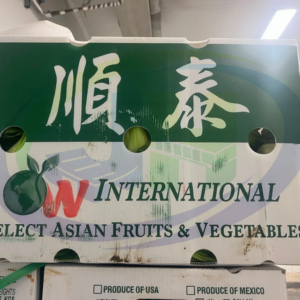
One of our agricultural packaging customers in Los Angeles previously used cardboard boxes for vegetables and other produce. Because the boxes needed protection from moisture, the growers used wax-coated cardboard.
According to the customer, those boxes cost approximately $2.00–$2.50 each.
For the plastic alternative supplied for this project, the DDP cost was approximately $1.70–$2.00 per box.
This is an important distinction when comparing a plastic box vs cardboard box. Basic cardboard may have a lower purchase price, but adding water-resistant treatments can significantly change the final cost.
2. Reuse Can Change the Cost per Trip
Purchase price tells only part of the story.
Consider one actual corrugated plastic produce box we manufacture:
- Size: 490 × 321 × 321 mm
- Thickness: 3.8 mm
- Sheet weight: 780 gsm
- PP content: 95%
- Factory price: approximately $1.26 per box
Depending on handling conditions, this type of agricultural box can be reused 100 times or more.
Using the factory price simply as an example:
$1.26 ÷ 100 uses = $0.0126 per use
Real operating costs will also include freight, return logistics, cleaning, loss, and damaged boxes, so this calculation should not be treated as a guaranteed total cost per trip.
Still, it demonstrates why reuse frequency matters.
If a company has no way to return empty boxes, reusable packaging may offer little financial benefit. If boxes circulate repeatedly between farms, warehouses, factories, or distribution centers, the economics can look very different.
3. What Happens When Water Is Involved?
Moisture is one of the biggest practical differences in the plastic box vs cardboard comparison.
Standard cardboard can lose strength after absorbing water. Wax coating can improve its resistance, but it adds another material and can make end-of-life recycling more complicated.
PP corrugated plastic does not absorb water like paper-based packaging.
For agricultural operations, workers can wash the plastic boxes with water, wipe them down, and put them back into circulation. This is particularly useful when packaging vegetables, fruits, and other produce in environments where boxes regularly encounter moisture.
Our Los Angeles customer eventually replaced the wax-coated cardboard packaging with corrugated plastic boxes. The cardboard boxes were frequently damaged during transportation and could not practically be returned for repeated circulation.
4. Which One Is More Durable?
The answer depends heavily on how the box is made and used.
Cardboard performs well for many normal shipping applications, particularly when the package only needs to complete one trip.
Corrugated plastic becomes more attractive when the same box needs to move repeatedly.
We have another example outside the agricultural industry. A Southeast Asian apparel customer purchased corrugated plastic boxes from us in August 2018 to move semi-finished garments through its production process.
The same batch remains in use, with boxes circulating for at least 8–10 hours per day.
That does not mean every plastic box will last for years. Load weight, sheet specification, handling, temperature, box design, and working conditions all affect service life. But it illustrates why durability should be evaluated based on the actual application rather than a generic lifespan claim.
5. What About Storage and Return Transportation?
Reusable packaging creates another challenge: empty boxes eventually need to come back.
Corrugated plastic boxes can be designed to fold flat when empty. This reduces the space required for storage and return transportation.
Depending on box dimensions and loading method, we can typically load approximately 9,000–12,000 folded boxes in a shipping container.
This matters for closed-loop packaging systems because return logistics can determine whether reusable packaging makes financial sense.
A durable box is not economical if returning empty containers costs more than replacing them.
6. Customization and Product Protection
Both cardboard and plastic packaging can be printed and customized, but corrugated plastic offers useful options for reusable industrial packaging.
For example, we produce automotive packaging for an Australian customer using corrugated plastic together with EVA foam and internal dividers. The structure separates rearview mirrors and other automotive components during handling.
Agricultural boxes have different priorities. They may use custom dimensions, moisture-resistant construction, folding designs, and printed company logos for brand identification.
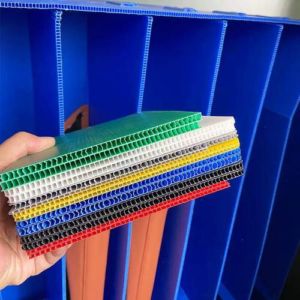
Corrugated plastic can also be cut, creased, welded, heat-sealed, die-cut, printed, riveted, folded, and assembled into custom structures.
7. What Happens at the End of the Box’s Life?
No reusable box lasts forever.
When our PP corrugated boxes are no longer suitable for circulation, the polypropylene material can be collected and sold according to the local scrap-plastic value, where appropriate recycling facilities are available.
Cardboard also has established recycling streams, but coatings, wax, moisture, food residue, and other contamination can affect recyclability.
For either material, businesses should check the recycling requirements and facilities available in their local market.
So, Plastic Box vs Cardboard: Which Should You Choose?
If you need inexpensive packaging for a dry, one-way shipment, cardboard often makes practical sense.
If your boxes regularly encounter water, require washing, need to make repeated trips, or circulate within a returnable packaging system, corrugated plastic deserves a closer cost analysis.
Instead of asking only, “How much does one box cost?”, ask:
“How much will this box cost us for every successful trip?”
That question usually gives procurement teams a much more useful basis for comparing plastic and cardboard packaging.