 ?>
A cardboard box may work perfectly for one shipment. But what happens when it gets wet, needs to be reused, or must protect heavy components during repeated handling?
For many manufacturers, these are practical reasons to consider corrugated plastic packaging.
Made from polypropylene (PP), corrugated plastic sheets can be converted into reusable boxes, dividers, layer pads, and protective inserts. The challenge is choosing the right material and box design for the job.
Here’s what buyers should know before ordering.
What Is Corrugated Plastic Packaging?
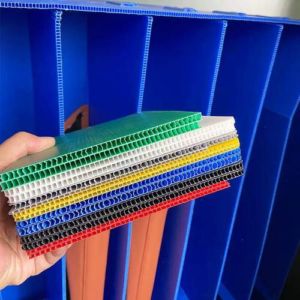
Corrugated plastic sheets have two flat outer surfaces connected by parallel internal ribs. This hollow structure keeps the material relatively lightweight while providing useful rigidity.
Unlike cardboard, polypropylene resists water absorption and can be cleaned for repeated use.
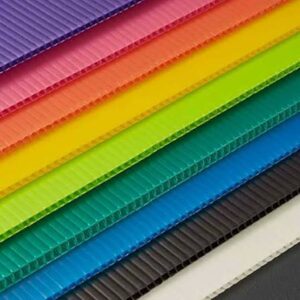
Manufacturers can also adjust sheet thickness, weight, color, and material formulation to meet different packaging requirements.
For businesses handling moisture-sensitive shipments or returnable containers, these features make PP sheets worth considering.
Common Applications of PP Corrugated Sheets
At Zibo Junhui Plastic Co., Ltd., our frequently exported products include:
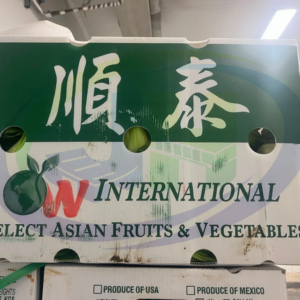
Fruit and Vegetable Boxes
Plastic boxes can handle damp agricultural environments and support reusable produce packaging systems.
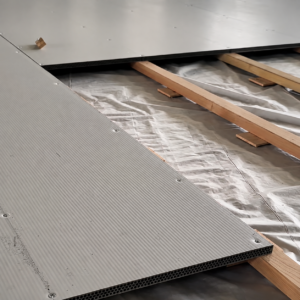
Pallet Layer Pads
Flat sheets separate stacked products during storage and transportation.
Automotive Parts Boxes
Custom containers and dividers help protect components from direct contact and movement.
Advertising Boards
Corrugated plastic sheets can also be surface-treated for printing, making them useful for signs and displays.
Each application requires a different balance of sheet weight, rigidity, and processing.
Corrugated Plastic vs Cardboard Packaging
Cardboard remains a practical option for low-cost, one-way shipping. However, its performance can decline when exposed to moisture or repeated handling.
| Feature | Corrugated Plastic | Cardboard |
|---|---|---|
| Moisture Resistance | Resists water absorption | Can weaken when wet |
| Reusability | Suitable for repeated use | Often limited |
| Cleaning | Can be washed or wiped | Difficult after wetting |
| Custom Additives | UV-resistant, flame-retardant options | Depends on treatment |
| Initial Cost | Often higher | Often lower |
The best choice depends on the application.
For reusable systems, buyers should consider replacement frequency and handling costs—not just the initial price.
Real Customer Case: From Cardboard to Custom PP Boxes
One industrial customer approached Junhui Plastic with four existing cardboard box designs.
Instead of immediately offering a replacement, our sales and technical teams reviewed the original dimensions, loading conditions, and stacking requirements.
The project went through three development stages.
Stage 1: Understanding the Original Packaging
We studied the four cardboard designs and developed initial PP box samples.
Our team evaluated different flute orientations and product placement methods, including horizontal loading and upright positioning.
These trials helped us understand how the box structure responded to the customer’s handling requirements.
Stage 2: Improving the Box Design
The customer requested additional samples using 1,200 gsm PP corrugated sheets and multiple flute orientations.
We reviewed four design options, discussed box height and safety concerns, and confirmed updated drawings before preparing further samples.
The goal was not simply to use heavier material. We needed a box structure that worked during loading, stacking, and transportation.
Stage 3: Refining the Closure System
The customer then asked us to double the width of the hook-and-loop fastening strips for better closure performance.
Our designer proposed adjustments to strip width, length, and position.
These changes gave the customer more flexibility without redesigning the entire box.
How Was the Packaging Tested?
The customer established specific acceptance requirements for the finished boxes.
These included:
- Hinged sections should remain open without springing back during loading.
- Hook-and-loop fasteners should secure the closure without gaps or additional tape.
- Each box corner should withstand a specified 10 kg localized load without visible deformation or whitening.
- Hinges should complete 100 opening-and-closing cycles at 90° without cracking or puncturing.
- A box containing 12 kg of products should withstand a drop from 0.8 m without wall rupture or ultrasonic weld failure.
Minor corner indentation during the drop test was acceptable under the customer’s criteria.
Junhui Plastic worked through the required testing and design adjustments, and the customer approved the final solution.
This project shows why corrugated plastic packaging should be evaluated as a complete box system—not just as a flat sheet.
How to Choose the Right Thickness and GSM
For industrial packaging, thickness alone doesn’t determine performance.
A 3 mm sheet weighing 1,000 gsm may behave differently from a lighter sheet of the same thickness.
At Junhui Plastic, common specifications range from 2 mm to 10 mm, depending on the application.
For reusable boxes, buyers should consider:
- Product weight and dimensions
- Stacking height
- Flute direction
- Closure and welding methods
- Handling and transportation conditions
Samples and testing are particularly important when boxes carry heavy or fragile products.
Customization, Quality Control, and Lead Times
Junhui Plastic offers cutting, creasing, welding, heat sealing, die cutting, printing, riveting, folding, and box assembly.
Our laboratory capabilities include drop, compression, puncture, and raw material composition testing.
Sample preparation typically takes around two days, depending on design complexity.
Minimum order quantities vary by product, while standard production orders generally require 5–10 days, subject to specification and scheduling.
Frequently Asked Questions
Is corrugated plastic packaging waterproof?
Polypropylene resists water absorption, although finished boxes may have openings or joints that allow water inside.
Can PP boxes replace cardboard?
Yes, for many applications. The replacement design should account for product weight, stacking, handling, and required testing.
Is corrugated plastic packaging recyclable?
Polypropylene is recyclable where suitable collection and processing facilities are available.
Can packaging boxes include custom closures?
Yes. Depending on the design, manufacturers can incorporate hook-and-loop fasteners, welded joints, handles, and other features.
Final Thoughts
The value of corrugated plastic packaging comes from more than moisture resistance or reuse.
A well-designed box must fit the product, withstand handling, and work efficiently throughout the shipping process.
At Zibo Junhui Plastic Co., Ltd., we develop customized PP corrugated boxes, layer pads, and protective packaging for industrial customers.
Planning to replace cardboard packaging? Share your current box dimensions, product weight, stacking requirements, and expected handling conditions. Our team can help develop samples and evaluate a suitable solution.