 ?>
When choosing plastic sheets for industrial packaging, the internal structure matters just as much as the material itself.
PP corrugated sheets and PP honeycomb sheets are both made primarily from polypropylene. They offer moisture resistance, relatively low weight, and useful durability. However, they are designed for different applications.
If you’re comparing PP corrugated vs honeycomb, the main factors to consider are strength, sheet weight, fabrication requirements, and cost.
Understanding these differences can help you avoid paying for unnecessary material performance or choosing a sheet that doesn’t meet your packaging needs.
What Is a PP Corrugated Sheet?
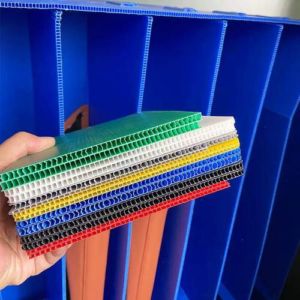
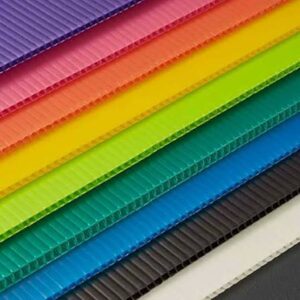
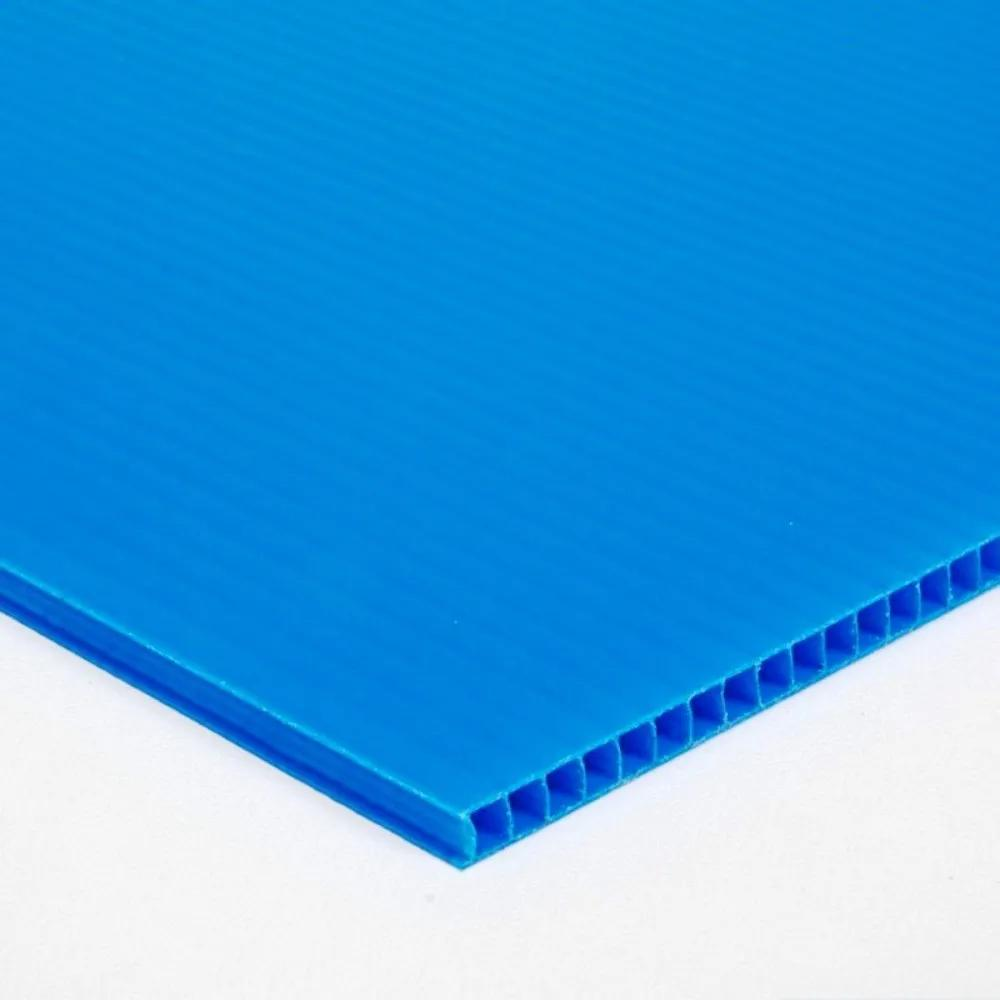
A PP corrugated sheet, also called a twin-wall polypropylene sheet, has two flat outer surfaces connected by parallel internal ribs.
These ribs create hollow channels that reduce weight while providing structural support.
Because the channels run in one direction, the sheet’s bending behavior can vary depending on the direction of the load.
PP corrugated sheets are widely used for:
- Reusable packaging boxes
- Pallet layer pads
- Automotive parts dividers
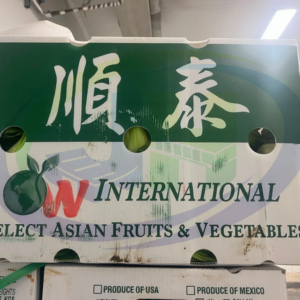
- Agricultural packaging
- Advertising and display boards
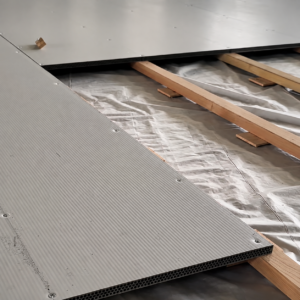
- Construction surface protection
One important advantage is fabrication flexibility. Manufacturers can cut, crease, fold, weld, and print these sheets to create customized packaging products.
What Is a PP Honeycomb Sheet?
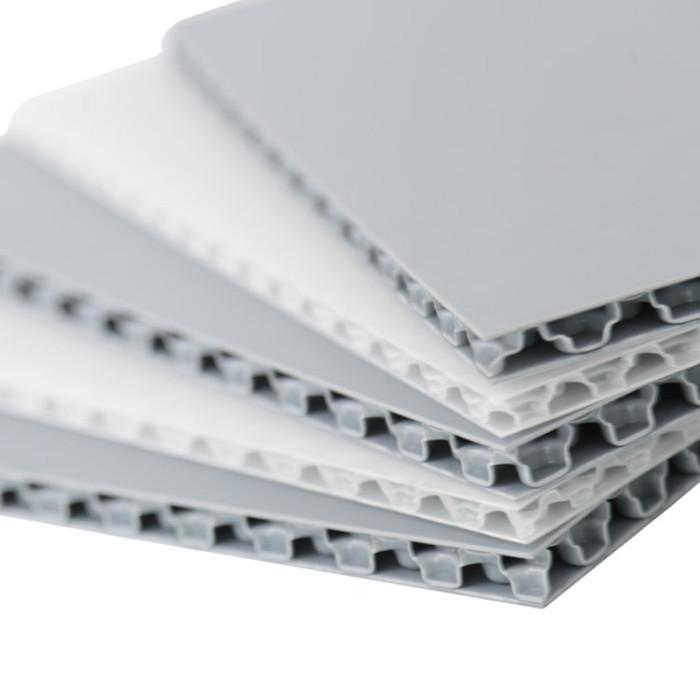
A PP honeycomb sheet uses a cellular core instead of straight, parallel channels.
Many products feature a honeycomb-like core between two outer surfaces, creating a sandwich-panel structure.
This design can provide high bending stiffness relative to weight, particularly when the core and outer skins work together.
Manufacturers commonly use PP honeycomb panels for automotive interior components, reusable bulk packaging, partitions, protective panels, and transportation applications.
However, honeycomb sheets vary considerably. Some use tubular cells, while others have different cellular patterns, surface layers, or reinforcement materials.
Their performance depends on the complete panel construction, not simply the honeycomb shape.
PP Corrugated vs Honeycomb: Key Differences
| Feature | PP Corrugated Sheet | PP Honeycomb Sheet |
|---|---|---|
| Core Structure | Parallel hollow channels | Cellular honeycomb structure |
| Weight | Lightweight | Lightweight |
| Rigidity | Direction-dependent | Can offer high panel stiffness |
| Processing | Easy to cut, crease, fold, and weld | Depends on panel construction |
| Typical Applications | Boxes, dividers, layer pads | Rigid panels, bulk packaging, partitions |
| Moisture Resistance | Good | Good with suitable construction |
| Initial Cost | Often lower for simple packaging | Often higher for complex panels |
Neither material is automatically better in every situation.
The correct choice depends on the required performance and finished product design.
1. Strength and Structural Performance
Strength is one of the biggest considerations in the PP corrugated vs honeycomb comparison.
Corrugated sheets rely on parallel ribs to support the outer surfaces. This structure provides useful rigidity for boxes, separators, and protective packaging.
Honeycomb panels distribute loads through a cellular core and outer skins. Properly designed panels can provide excellent stiffness-to-weight performance.
Does this mean honeycomb is always stronger?
No.
A heavy corrugated sheet may outperform a lightweight honeycomb panel under certain loading conditions.
Buyers should compare bending stiffness, compression resistance, and impact performance using samples tested under similar conditions.
Thickness alone is not enough to determine strength.
2. Weight and Material Efficiency
Both sheet types reduce weight by incorporating hollow spaces within their structures.
However, two sheets with the same thickness may have very different weights.
For example, a 5 mm corrugated sheet and a 5 mm honeycomb panel may use different amounts of polypropylene because their internal structures differ.
This is why buyers should compare both thickness and grams per square meter (gsm).
For applications where shipping weight matters, the goal should be to achieve the required performance without unnecessary material.
3. Manufacturing and Processing Differences
PP corrugated sheets are particularly practical for customized packaging.
At Zibo Junhui Plastic Co., Ltd., our corrugated sheet processing capabilities include cutting, creasing, welding, heat sealing, die cutting, printing, and box assembly.
These processes allow us to manufacture reusable boxes, partitions, protective sheets, and layer pads.
Honeycomb panels can also be cut and fabricated, but processing depends on the core design and surface materials.
Some panels support lamination or thermoforming, while others require specialized joining methods.
For packaging that needs frequent folding or complex box structures, corrugated sheets are often the simpler option.
4. Cost Comparison: Which Is More Economical?
Cost is another important factor when evaluating PP corrugated vs honeycomb sheets.
Corrugated sheets are often economical for standard packaging because their relatively simple structure supports efficient manufacturing and conversion.
Honeycomb panels may involve additional core manufacturing, lamination, or surface treatments.
However, a higher purchase price does not necessarily mean a higher overall cost.
A more rigid panel may reduce the need for additional reinforcement in certain applications.
To compare costs accurately, buyers should consider material weight, processing expenses, expected service life, and transportation requirements.
Without matching specifications and quotations, it is not possible to determine a universal price difference.
5. Common Industrial Applications
Automotive Industry
Corrugated sheets work well for component dividers and reusable packaging boxes. Honeycomb panels are also used in automotive interior panels and other applications requiring stiffness.
Food and Beverage Packaging
PP corrugated sheets are widely used for layer pads, protective dividers, and reusable containers.
Construction Industry
Corrugated sheets can protect floors and finished surfaces. Honeycomb panels may be suitable for lightweight partitions and rigid protective panels.
Logistics and Transportation
Both materials can be used in returnable packaging systems, depending on load requirements and container design.
6. How to Choose the Right Material
Before purchasing either product, consider these questions:
- What products will the sheets protect?
- What loads must the material withstand?
- Will the sheets be reused?
- Does the finished product require folding or welding?
- What is the target cost per unit or shipping cycle?
At Junhui Plastic, our PP corrugated sheet specifications include common thicknesses from 2 mm to 10 mm, with custom weights, dimensions, and colors.
For applications requiring greater structural performance, material selection should include sample evaluation and appropriate laboratory testing.
Frequently Asked Questions
Is PP honeycomb stronger than PP corrugated sheet?
Not necessarily. Honeycomb panels can offer excellent stiffness-to-weight performance, but actual strength depends on thickness, density, construction, and loading conditions.
Which material is better for packaging boxes?
PP corrugated sheets are often more practical for folding boxes, dividers, and customized packaging structures.
Are both materials waterproof?
Polypropylene resists water absorption. However, finished panel performance depends on surface layers, bonding materials, and edge construction.
Which material costs less?
Corrugated sheets are often less expensive for straightforward packaging applications. Actual prices depend on specifications, order quantity, and processing requirements.
Final Thoughts
The PP corrugated vs honeycomb decision should begin with the application, not the appearance of the sheet.
Corrugated sheets are a practical choice for boxes, dividers, and flexible packaging designs. Honeycomb panels may offer advantages where panel rigidity and structural efficiency are more important.
At Zibo Junhui Plastic Co., Ltd., we manufacture customized PP corrugated sheets and related industrial packaging products.
If you’re comparing materials for your next project, share your application, dimensions, expected load, and processing requirements. Our team can help you evaluate suitable sheet specifications and discuss available solutions.